
Montessori in Goleta
Primary (ages 3 to 6)
Your child spends ages three to six in the same classroom, with teachers who come to know them over three or four years.

Kindergarten is part of the journey
For many families, kindergarten means choosing a new school. Here, it is simply the next year in a classroom your child already knows.
By then, your child is one of the oldest in the room. They have spent years learning alongside friends and guides who know them well, and now they get to lead: helping younger children, taking on harder work, and showing what they have learned. Their kindergarten year grows out of everything that came before it.
When they are ready for first grade, they can continue on to our Elementary program, right here on the same campus — one school, and a community of familiar faces that grow right alongside them.
Children from three to six want work they can finish
At this age, children often want to finish what they start. They will repeat a piece of work until it comes out right, and that repetition builds concentration. Independence grows through everyday experiences. As children prepare their own snacks, care for their classroom, and learn to solve problems, they discover what they can accomplish without an adult doing it for them.
Our Primary classrooms are built for that stage. Shelves sit low enough for a child to reach. Materials and light are natural. There is space to work alone or with others, on the floor or at a table.
Because the class mixes ages, each child moves at their own pace. Our teachers foster a deep sense of caring and respect, for one another and for the room itself.
How this works across every age: Why Montessori

A morning of purposeful work and individual lessons
| Time | What happens |
|---|---|
| 8:15 to 8:30 | Arrival and greetings |
| 8:15 to 11:15 | Independent work period |
| 9:00 to 10:30 | A healthy snack is available |
| 11:15 to 11:30 | Clean up and group time |
| 11:30 to 12:00 | Lunch |
| 12:00 to 12:45 | Outdoor exploration and playtime |
| 12:45 to 2:30 | Younger children prepare for quiet rest time. Older children have an afternoon work period and lessons for their age. |
| 2:30 to 2:45 | Clean up and come together for the end of the day |
| 2:45 to 3:00 | Departure for full-day children |
| 3:00 to 5:30 | After-school care, with indoor and outdoor activities and a snack |
The 12:45 line is worth a second look. While the younger children rest, the older ones stay at work with lessons of their own. That afternoon is where the final Primary year starts to look different.

The same materials, taken further each year
Each year, children go further with the same Montessori materials they already know. Language, mathematics, and practical life are three of the areas they work in.
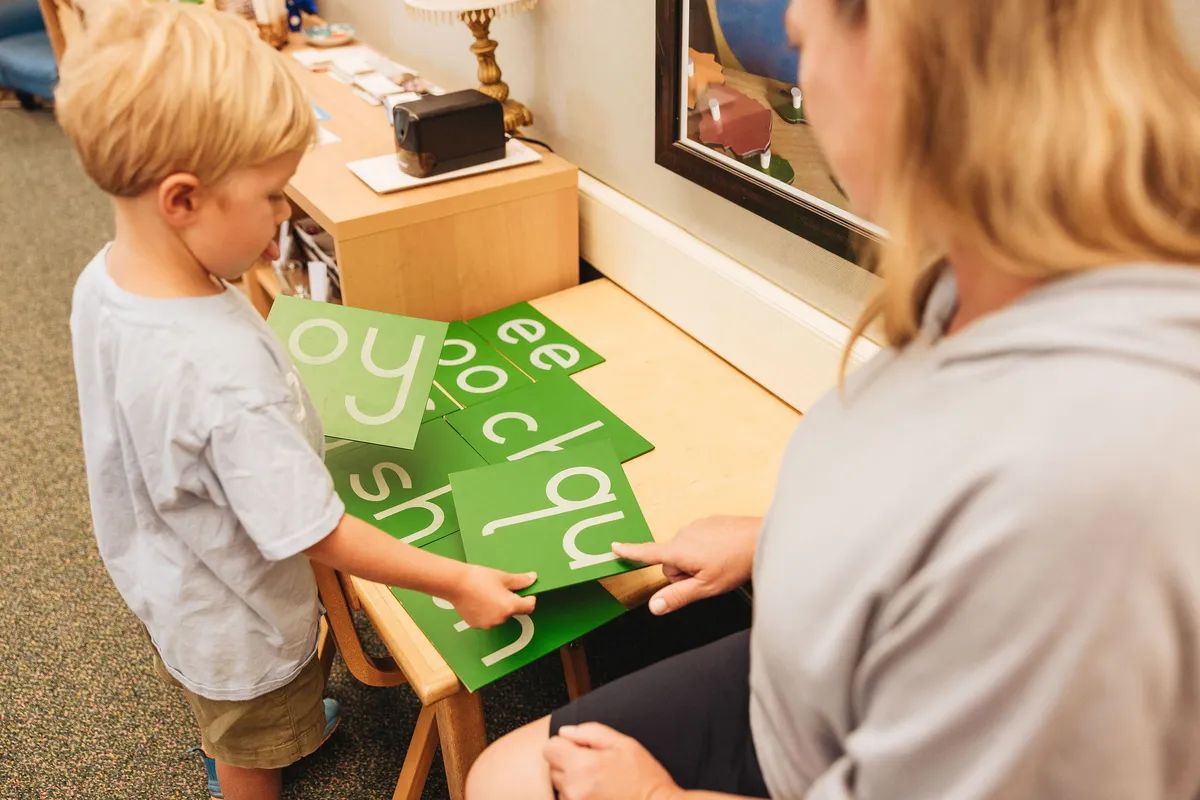
Language
Speaking, listening, and being understood, with a teacher alongside.
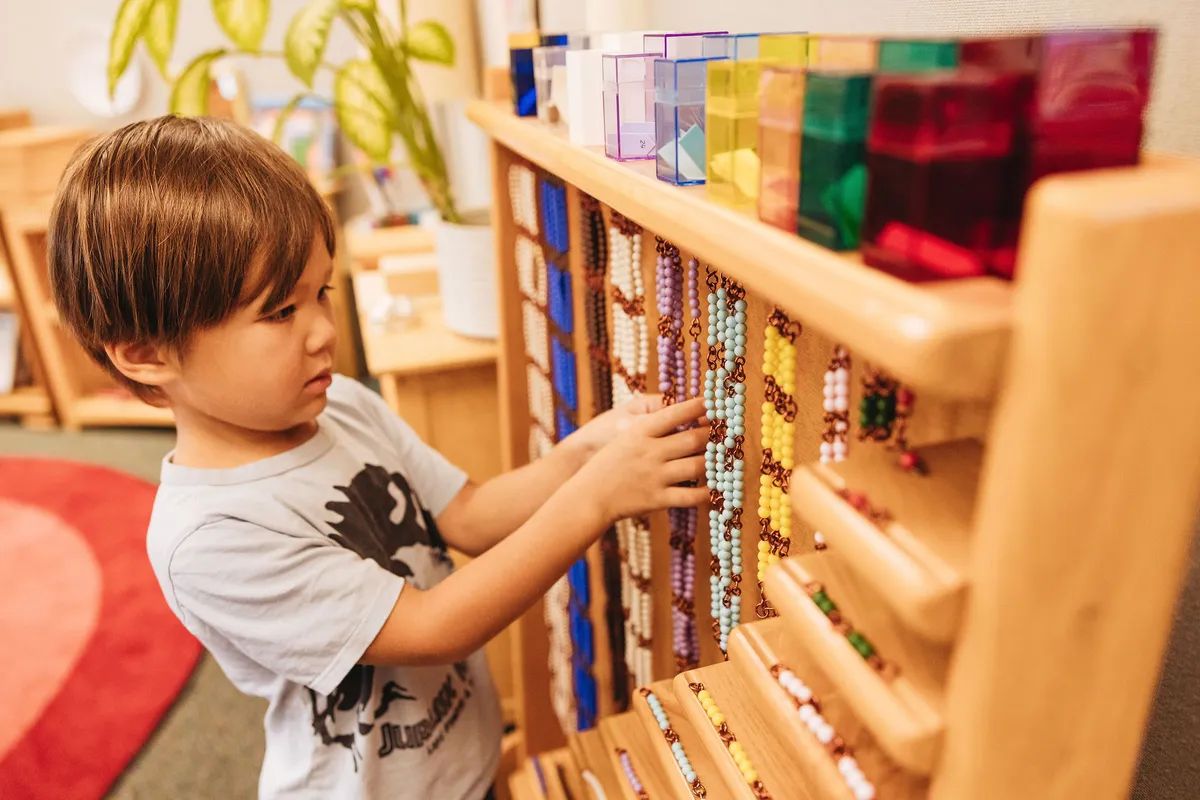
Mathematics
Quantities a child can hold, count, and compare.
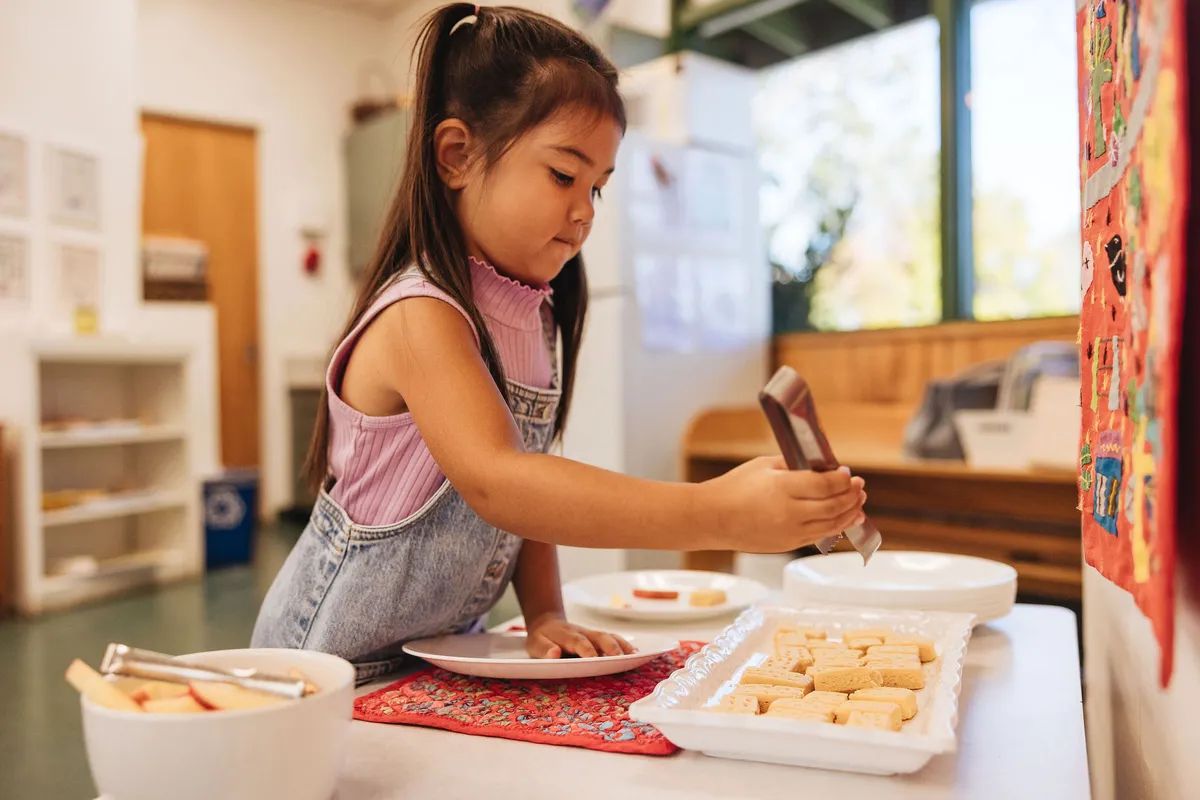
Practical life
Pouring, serving, cleaning up, and caring for the room and the people in it.


The rest of the Primary curriculum:
- Sensorial exploration
- Grace and courtesy
- Problem solving and critical thinking
- Development of the will
- Lessons in history, geometry, biology, geology, and geography
- Botany and zoology, which begin at this level, and time in nature whenever possible
- Art, music, and creative expression, woven through every area

At home, you may begin to notice a child who takes more initiative, works through challenges with greater confidence, and takes pride in what they can accomplish independently.
In kindergarten, your child becomes the one the younger children watch

In our Primary classrooms, the youngest children learn by watching the older ones at work. By kindergarten, your child is the one being watched.
The oldest children care for the room and show the younger ones how things are done, with kindness and patience. It is a year of deepening: skills practiced for years become work done well, and friendships become steady and sure.
Kindergarten doesn't start over. Your child already knows the room, the materials, and the teachers, so this year picks up right where the last one left off. If you can visit only once, this is the year we would most like you to see.
Primary children also get a first look at what comes next. Here, a group of them has been invited into a lesson in our Elementary classroom.

Who teaches your child in Primary
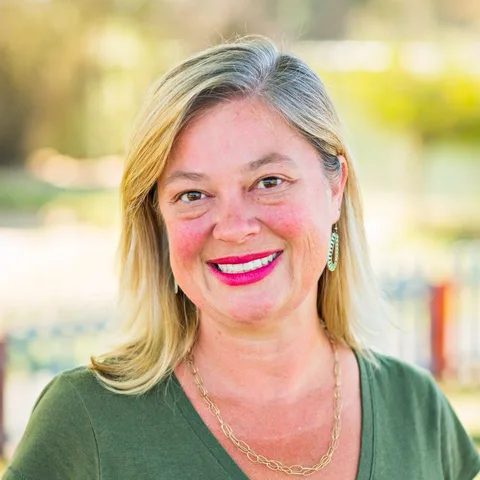
Leah
Primary Lead Guide
Leah has been here since the school opened in January 2017. She trained in AMI Primary at the Washington Montessori Institute in 2001 and holds a master's in Montessori Education from Loyola University. She has taught at AMI Montessori schools in Seattle, Marin County, and Santa Barbara.
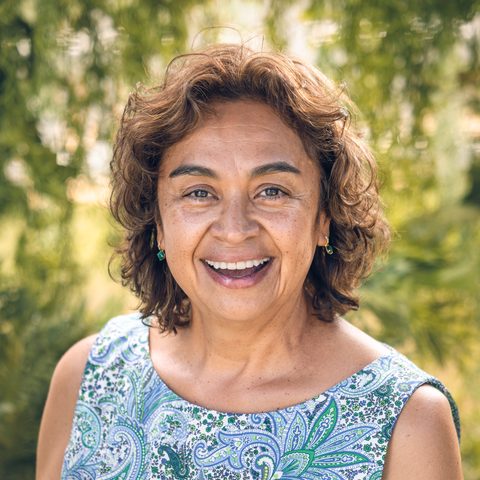
Claudia
Primary Program Teacher
Claudia completed her AMI Montessori studies at the Montessori Institute of San Diego in 2015. She holds a degree in Counseling & Guidance from the University of Louisville and a degree in Special Education.


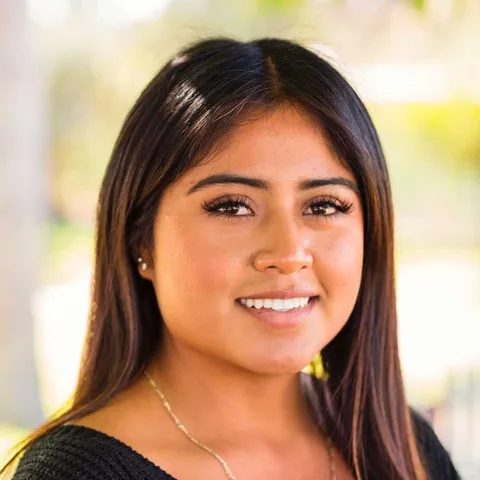
Brenda
Primary Program Assistant
Brenda earned her associate's degree in Early Childhood Development at Santa Barbara City College.
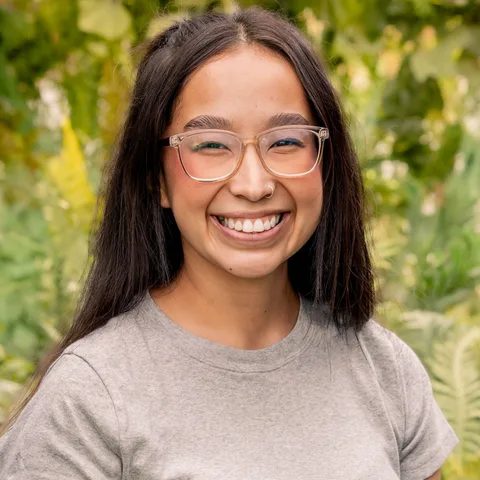
Daniela
Primary Program Assistant
Daniela earned her A.A. in Early Childhood Education at Santa Barbara City College.
Annie
Primary Program Aftercare
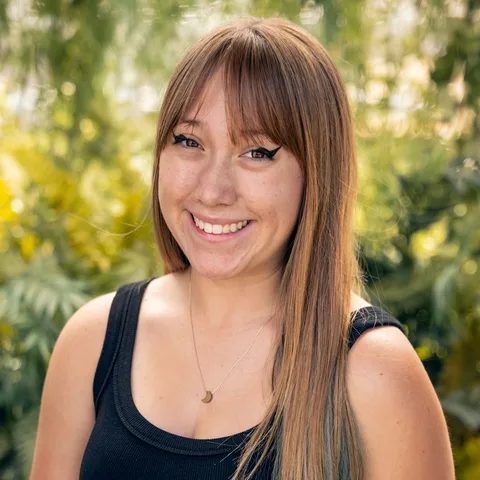
Annie has studied Early Childhood Education since high school, and she holds a black belt in karate.


Days, hours, and tuition for your child in Primary
Families choose a 10-month or a 12-month calendar. The 12-month option is a true full-day program all year, with no extra camps, child care, or schedule juggling.
Need-based tuition assistance is available at the Primary and Elementary levels.
Primary runs five days a week. Choose the day length that fits your family:
- Half day: 8:15 am to 12:30 pm
- Full day: 8:15 am to 3:00 pm
- Extended day: 8:15 am to 4:00 pm
- Aftercare: 8:15 am to 5:30 pm
Why families move up into Primary with us
Both my sons started reading and doing basic arithmetic at age 3.5. A true testament to the success of SCM and their programs! The teachers, staff, and administration truly care and are dedicated to each child and their development.
School Parent We began our time at South Coast Montessori in the infant program where the teachers provided a nurturing environment for my child to grow. We choose to continue her educational experience at SCM and she has now joined the primary classroom.
School Parent Over the years at SCM, our children learned how to be a contributing member of a community and laid the foundation for a lifetime love of learning.
School Parent
Questions Primary parents ask
Does Primary include kindergarten?
Yes. Primary has two classrooms, each for children ages three to six. Children stay three to four years, and the final year is their kindergarten year. After that, they continue to our Elementary program, grades 1 to 6, at the same school.
Our child could start TK or public kindergarten. Why stay for the final Primary year?
Both are options worth weighing. What staying gives your child is the year the Primary room is built around. They become one of the oldest children in a room they already know, with teachers who already know them. They lead, help the younger children, and consolidate what they have learned. They also have an afternoon work period with lessons for their age while the younger children rest.
What hours can my child attend?
Primary runs five days a week, and every day starts at 8:15 am. Half day ends at 12:30 pm, full day at 3:00 pm, and extended day at 4:00 pm. Aftercare runs until 5:30 pm. You can choose a 10-month or a 12-month calendar. Fees for each are on our tuition page.
Is Primary open over the summer?
Yes, on the 12-month calendar. It is a true full-day program all year, with no extra camps, child care, or schedule juggling. A 10-month calendar is also available.
Does my child have to nap?
After lunch, from 12:45 to 2:30, the younger children prepare for quiet rest time. The older children have an afternoon work period instead, with lessons for their age.
How big are the classes, and who teaches them?
Primary has two classrooms of 24 children each. The lead teachers are AMI-trained, and assistants work alongside them. Our staff are trained in SRP, CPR, and first aid.
What happens after Primary?
When they are ready, children continue to our Elementary program, grades 1 to 6. Primary children are already invited into Elementary lessons, so the next room is not a stranger's room.
Come and see a Primary classroom at work
On a tour you will see three-year-olds and kindergartners in the same room, working. Watch who is helping whom.
Already decided? Here is how to apply.
