
Montessori in Goleta
Infant (3 to 18 months)
Infants join us from three months old in the Nido, which means nest. It is a calm room made for the months before walking, where each child is free to move and is surrounded by language.

Teachers who come to know your infant
The greatness of the human personality begins at the hour of birth.
You know your child's rhythm better than anyone: when they get hungry, when they tire, what the fussing at ten o'clock means. When you choose a place for your infant, you are choosing the people who will come to know that rhythm, too.
In our Nido, that is the adults' first care. Our teachers are trained to observe each infant's development with tenderness and to offer what that child is ready for next.
Our aim for the infant program is self-confidence. We build it by supporting each infant's own curiosity, alongside the first lessons in kindness and respect for others.
Movement and language, at your infant's own pace
- Freedom to move, for healthy motor development. We encourage infants to learn through their senses, by watching the other children and exploring the room for themselves.
- Words, signs, and songs, for language. The adults use sign language, speech, reading, and singing with each infant, and answer them with encouraging, respectful expressions.
- Close observation, for the right next step. Teachers follow each infant's progress, then offer the materials and opportunities that fit where that child is now.
- A dependable rhythm, for security. Infants are fed, changed, and put down to sleep when they need it, inside a daily schedule they can count on.
The Nido is the first room in a school that runs from three months through sixth grade, all on one campus in Goleta.
A day that follows your infant's rhythm
Feedings, naps, and diaper changes happen when your infant needs them, not by a clock. Each day has a gentle, familiar pattern so every child comes to know what to expect.
Every infant has a place to sleep that is theirs alone, in a quiet room set apart from activity. Rest comes when it's needed.
If you are nursing, you are welcome to come in and feed your child at any time of day. You may also drop off expressed milk whenever it suits you.
Between feedings and naps, infants explore the room while the adults talk, sing, sign, and read with them.

A daily routine for walking infants
Once your child is walking, they move to our older-infant room where the day follows a predictable rhythm.
| Time | What happens |
|---|---|
| 8:15 to 8:30 | Arrival and greetings. |
| 8:30 to 9:30 | Indoor work period giving lessons and toilet training. |
| 9:30 to 10:00 | Indoor community snack together and clean-up. |
| 10:15 to 11:30 | Outdoor activities on the older infant play yard. |
| 11:15 to 11:30 | Prepare half day children for pick-up. |
| 11:30 to 12:00 | Outdoor lunch time eating together and clean-up. |
| 12:00 to 2:15 | Afternoon nap/rest time. |
| 2:15 to 2:30 | Outdoor snack time. |
| 2:30 to 2:45 | Prepare full day children for pick-up. |
| 3:00 to 3:45 | Indoor or outdoor activities. |
| 3:45 to 4:00 | Prepare extended day children for pick-up. |
Music, expressive movement, and art are part of every week.

Why the infant rooms are set up the way they are
Most of what is in the Nido sits at an infant's height, on purpose. Each thing is chosen for language, thinking, or movement.
In the Nido
- Soft floor mats and bolsters, so infants can move freely and build their gross motor skills.
- Mirrors close to the floor, for tummy time and for infants to discover themselves.
- Low shelves of materials, such as puzzles, rings on a post, and containers to open and close. They work the small muscles of the hand and show a child cause and effect.
- Stands, stairs, and bars, for pulling up to standing and for other active movement.

In the older-infant room
- Child-sized furniture that walking infants use on their own, for fine and gross motor skills.
- Spoken language and conversation, with specific language materials and a large library that rotates.
- Hand-and-eye materials made for small fingers.
- Self-care and care of the room, including the first steps of toilet learning.
- Time outdoors, exploring nature, balanced with time concentrating on purposeful work indoors.

Outside, infants have their own yard. In 2022 we remodeled it with a new fence, lawn, and landscaping, paid for with funds from our Move-A-Thon.
When your child walks, the move up follows their pace
We call the infant room the Nido, Italian for nest: a place a child is held until they are ready to leave it on their own feet.
- From 3 months
The Nido
A calm room where your child moves freely and hears language all day, in the months before walking.
- Once your child walks
The older-infant room
We work with you to move your child in gradually, with no set date: the timing follows your child.
- From 18 months
Toddler
Your child steps up to our Toddler program, for children from 18 to 36 months.
Toddler is on the same campus, and so is every program through sixth grade.

Who cares for your infant
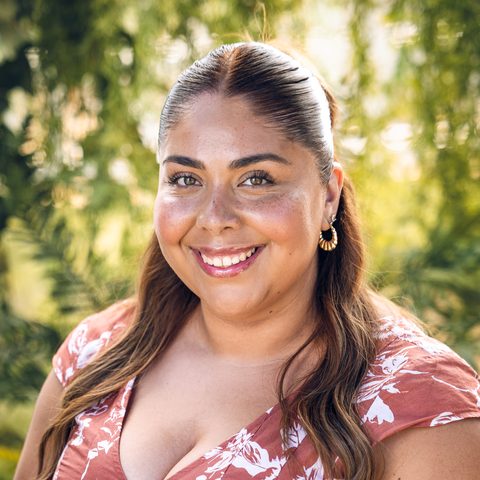
Itzayana
Infant Program Teacher
She holds three Early Childhood Education certificates from Santa Barbara City College, one of them in Infant/Toddler development.

Yvette
Infant Program Teacher
She holds an associate degree and three Early Childhood Education certificates from Santa Barbara City College.



Anayanzin
Infant Program Assistant
She graduated from Santa Barbara City College in 2019 with an associate degree and three Early Childhood Education certificates.

Raven
Infant Program Assistant
She is studying Early Childhood Education at Santa Barbara City College and brings a strong background in art.

Stephanie
Infant Program Assistant
She is studying Early Childhood Education at Santa Barbara City College, and working with infants is what she loves.

Emma
Infant Program Assistant
She earned her bachelor's degree from Chapman University in 2023 and studied Early Childhood Education through UCLA.


The team is trained to observe each infant's development and to know what to offer next. Our staff are trained in SRP, CPR, and first aid.
A close relationship with your family, and consistent communication every day, is a priority for the whole team.

Days, hours, and tuition for your infant, all year round
Days: 3, 4, or 5 consecutive days a week.
- Half day: 8:15 am to 11:30 am.
- Full day: 8:15 am to 3:00 pm.
- Extended day: 8:15 am to 4:00 pm.
- All year: Infant is part of our 12-month program, so there is no summer break to plan around.
- Group size: 6 to 8 infants in the Nido, and 8 to 10 in the older-infant room.
- Tuition: depends on the days and day length you choose. See full tuition
A second home, from the very first year
This is not a daycare, even for the youngest students. As a parent of two children who have attended since infancy, this school encourages kids to be independent and active participants in their own learning journey. This community builds confidence and the love for learning both in practical and academic settings.
School Parent An exceptional learning environment! The trained staff are supportive, passionate and the kids truly trust them. The environments are gorgeous and stay true to the pedagogy. SCM is a dream for us, as parents, and a second home, in so many ways, for my son.
School Parent
Before your child starts: your infant program questions
Day to day
Will my child eat and nap on their own schedule?
Yes. Feedings, diaper changes, and naps happen on demand, according to each infant's needs. Around them, we keep a consistent, dependable daily rhythm. Every infant has their own nap space in a calm sleeping area.
Can I come in to breastfeed, or bring expressed milk?
Yes, at any time of day. Nursing mothers are welcome to come in and feed their child. You can also drop off expressed milk whenever it suits you.
How will I know how my child's day went?
Consistent daily communication with families is a priority for our infant team, along with a close relationship with each family.
The room and the people
What makes an infant program Montessori?
Start with the adults. Our infant teachers are trained to observe each infant's development and to choose materials and opportunities from what they see. The room is prepared for infants. Mirrors sit low for tummy time, materials sit on low shelves within reach, and there are bars to pull up on. Children move freely, and the adults sign, talk, read, and sing with them.
How many infants are in a room?
The Nido has 6 to 8 infants, and the older-infant room has 8 to 10.
What training does the infant team have?
Our staff are trained in SRP, CPR, and first aid. Both infant teachers and one assistant hold Early Childhood Education certificates from Santa Barbara City College, and one teacher's certificates include Infant/Toddler development. Two assistants are studying Early Childhood Education there now, and another holds a bachelor's degree from Chapman University.
Schedule and cost
What days and hours can we choose?
Choose 3, 4, or 5 consecutive days a week. A half day runs 8:15 am to 11:30 am, a full day 8:15 am to 3:00 pm, and an extended day 8:15 am to 4:00 pm.
Does the Infant program close for the summer?
No. Programs for Primary and below run a true 12-month year, so there are no extra camps or schedule juggling to arrange.
What does the Infant program cost?
Infant tuition depends on how many days you choose and how long each day is. The current figures, and any additional program fees, are on our tuition page.
Starting
What happens when my child starts walking, and at 18 months?
When your child walks, we work with you to move them gradually into the older-infant room. At 18 months, the next step is our Toddler program, for children from 18 to 36 months.
How do we get started, and how can we see the infant program?
Start with the infant tour, which is a virtual tour for parents. After that, you apply online. When a place opens, you, your child, and the teacher meet for a school visit. How to apply walks through each step, including what happens at that visit and how long it lasts. We enroll all year round, so you can apply at any time.
Take a look inside the Nido from home
The first step toward the Nido is a virtual tour for parents. Pick a time that suits you.
