
Montessori in Goleta
Elementary (grades 1 to 6)
Around six, children stop asking only what something is. They start asking why, and how it connects to everything else.

Learning together in small groups
Six-year-olds want to know how things began and why they work. They would rather work beside a friend than alone, and when a question catches their imagination, they will pursue it with remarkable energy. Montessori called this the second plane of development.
That is why lessons here happen in small groups, where each child can ask questions, share what interests them, and add something of their own. Children choose where to work and with whom. They talk their ideas through as they go, and often take on a project together, deciding who will do what. Working side by side all day, they also learn to work through a disagreement.
Joining Elementary in any grade, from our Primary or another school
Children can join our Elementary program in any grade from first through sixth, whenever a place is available. Grades 1 to 6 learn together in one community, and each child works at their own level. Nothing holds a child back, and nothing rushes them ahead. Because every child is working on something different, a new student fits in easily.
Our guides meet with each child's family regularly, so they know where every child is in their learning, whichever grade they joined in.
We enroll year round, and places are offered as they open.
- Visit first. Tours are for adults only. What happens on a tour
- Then apply. The Elementary application comes with a $100 application fee. How to apply
One community, in two stages
You may hear these called Lower Elementary (grades 1 to 3) and Upper Elementary (grades 4 to 6). Here, they are two stages of one community. Because the ages mix, older children lead and younger ones see what is coming next.

From the hands to the head
Hands-on materials let children hold an idea before they reason about it. Reading and writing become tools for finding things out, and the why questions are everywhere.

Longer work planned by the child
Older children take on longer research and writing, plan more of their own time, and care a great deal about what is fair. They are now the oldest in Elementary, and they often lead.
Children plan their own day, keeping a steady rhythm
Our school day runs from 8:15 to 3:00, five days a week. Within that frame, no two days look alike. Children choose what to work on, with their guides' help, and learn to use their time well.
The daily schedule
| Time | What happens |
|---|---|
| 8:15 to 8:30 | Morning drop off |
| 8:30 to 11:30 | Morning work period: lessons are given, follow-up work is done |
| 11:30 to 12:00 | Lunch |
| 12:00 to 12:45 | Outside play time |
| 12:45 to 1:00 | Silent reading time |
| 1:00 to 2:30 | Afternoon work period: lessons and continuation of morning work projects |
| 2:30 to 2:45 | Read aloud |
| 2:45 to 3:00 | Pick up time |
The long morning work period gives children three uninterrupted hours, with no bell for each subject. One day might begin by picking up yesterday's botany work. Another might mean trying new art techniques at the Art Museum.
Free to choose, not free to do nothing
Our Head of School, Brian Cogswell, puts the guiding principle of the Montessori classroom this way: “The child is free to choose their work, but the child is not free not to work.”
Three simple practices keep that freedom purposeful:
- A daily journal. Each child writes down what they accomplished that day.
- One-to-one conferences. Children meet regularly with their guide, so each one is working across the whole curriculum, at the right level.
- A yearly standardized assessment. Starting in third grade, every student takes one. It is one of many ways teachers see where a child is strong and where they need support.



Going Out: Trips your children help plan
Elementary students help plan trips off campus. They research where to go, work out the logistics, and then see what they studied in class out in the world.
- Maritime Museum. On one Going Out trip, students caught sand crabs, built a mini habitat, and released the crabs afterward. From the shore, they watched a pod of dolphins in the shallow water. Read the story of this trip on our blog
- NatureBridge. Each year, Upper Elementary students spend several days and nights at NatureBridge in the Marin Headlands, living and learning together in nature, away from home.
- A day at the beach. Time to play in the water and the sand, with friends across the grades.

Spanish with a teacher who grew up speaking it
Elementary students learn Spanish with Meaghan Yolles, our Spanish Language Instructor. Meaghan has spoken Spanish since she was a toddler, and she spent three years teaching in Madrid, including a year as an Assistant Teacher in a Primary classroom at Madrid Montessori, an AMI international school.
She holds an AMI Primary Diploma from the Montessori Institute of San Diego and a Master of Arts in Education from Loyola University Maryland.
Who teaches your child in Elementary
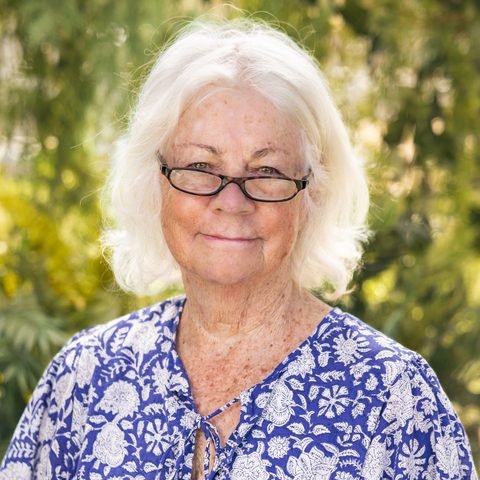
Frances
Elementary Program Guide
More than 45 years of AMI Montessori experience. She graduated from the International Center for Montessori Studies in Bergamo, Italy, and has taught at the elementary level for over 40 years.
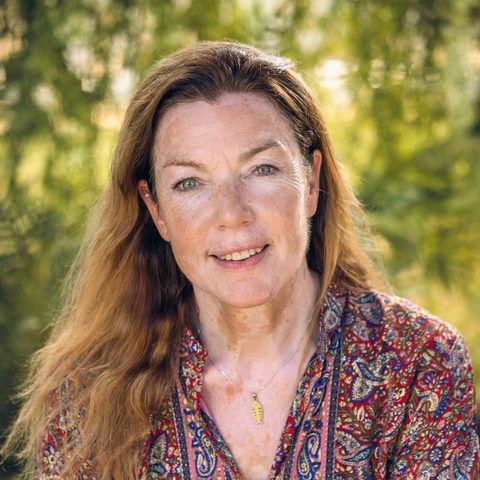
Beatrice (Bea)
Elementary Program Guide
Completed her AMI 6 to 12 training in France, at CFMF, in 2015, and has taught Elementary in France, Spain, Cyprus, and Italy. She also holds a PhD in History from UC Irvine.

Ewan
Elementary Program Assistant
A Santa Barbara local with a background in youth coaching, camp programming, and physical education.
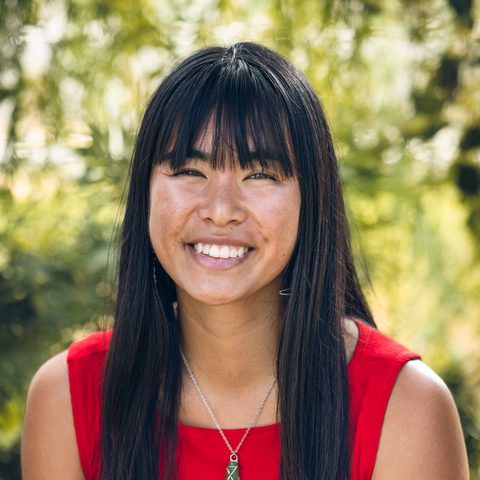
Juliette
Elementary Program Assistant
Studied Environmental Studies at UC Santa Cruz, and found her love of teaching while working at a rock gym.
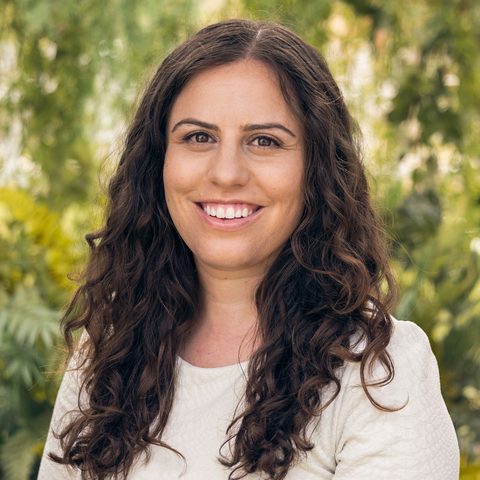
Meaghan
Spanish Language Instructor
Teaches Spanish to Elementary students.


What the Elementary classroom looks like
Materials sit on low shelves the children can reach, so a child who has chosen a piece of work can go and get it. The room has natural light, and children work where they choose: alone or with friends, on the floor or at a table. Owl pellets, geodes, and fossils sit alongside living plants and animals, so the why questions have something real to start from.


Warm teachers, challenging work

The educational experience is tailored to your child's readiness. The teachers are warm and empathetic while also providing challenging material. Most of all we have grown to love the community of families, teachers, and staff at South Coast Montessori.
School Parent We felt comforted sending our children to a place where we knew they were loved and respected and watched in amazement as they experienced explosions in learning and development under the stewardship of the skillful teachers.
School Parent
Can my child join later? Elementary questions answered
Can my child join in 2nd, 3rd, or 5th grade if they haven't been at South Coast Montessori before?
Yes. Enrollment is rolling and based on availability, in any grade from 1st through 6th. Start with a tour, then the Elementary application. Because ages mix across the program, a new student joins children who are already working at different levels.
How will I know how my child is doing?
Each child keeps a daily journal of what they accomplished, and the teacher holds periodic one-to-one conferences with them. Every year, all students in grade 3 and above also take a standardized assessment. It is one of many tools the teachers use to see strengths and challenges.
Do Elementary students learn Spanish?
Yes, with our Spanish Language Instructor, who holds an M. Ed. She learned Spanish as a toddler and taught for three years in Madrid.
What are the hours, and is there care after school?
Elementary runs five days a week, 8:15 am to 3:00 pm. The after-school program runs from 3:00 pm to 5:30 pm, with activities including sports, art, and music. Fees are on the Elementary tuition and fees page.
Do the children leave campus?
Yes. Elementary students help plan Going Out trips, such as a visit with the Maritime Museum to study sand crabs on the shore. In 2026, Upper Elementary students also spent five days and four nights at NatureBridge in the Marin Headlands.
What happens after sixth grade?
South Coast Montessori serves children through sixth grade, so sixth grade is a child's last year here. Our view is that a Montessori Elementary student leaves well prepared to use the resources of whatever school they attend next.
Elementary children deep in a morning's work
Over six years, children here learn to plan their own time and research what they want to know. The oldest often lead the younger ones coming up behind them. We offer rolling enrollment so you may apply at any time of year.
Or call us at (805) 845-6555
